
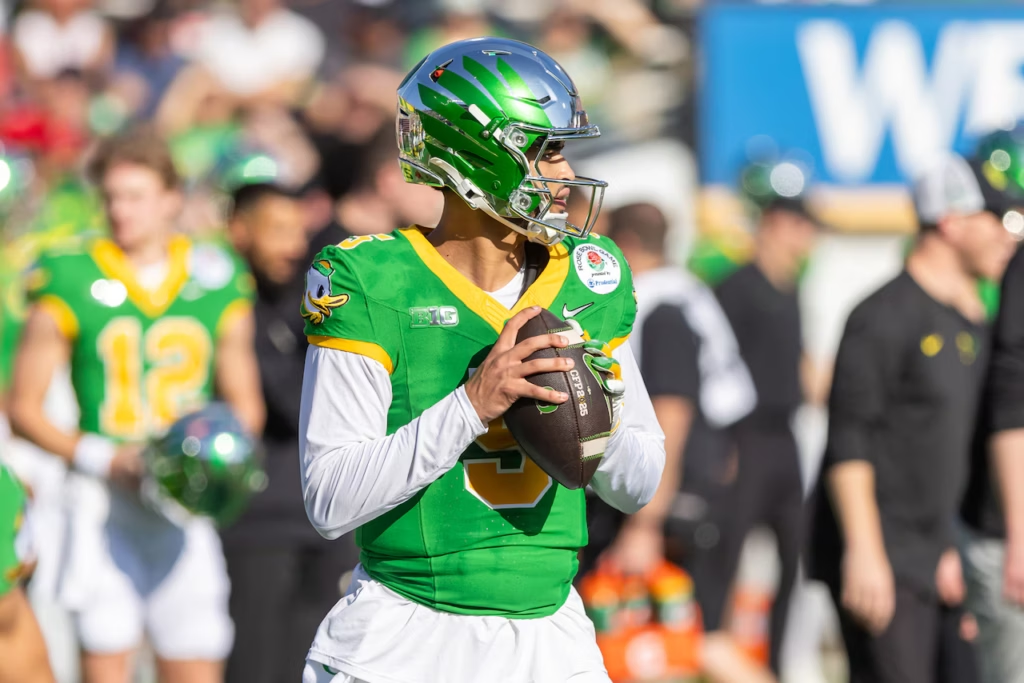
Oregon Ducks' quarterback Dante Moore - Sean Meagher/The Oregonian
Could the NCAA finally be seeing the upside of player NIL money? For starters, players who stay in college longer, rather than declaring for the pro game earlier, can earn up to $10 million in NIL compared to a standard rookie contract of just $5 million a year.
Additionally, some players may need a little more time to develop, while others may show signs that they are ready to enter the pros sooner rather than later.
Let’s examine how NIL deals can affect a player’s role as they head into the NFL.
What is NIL Money?
NIL stands for Name, Image, and Likeness. The Supreme Court legalized it on July 1, 2021. For years, college players had to endure playing amateur football without pay. Meanwhile, the top coaches in the league made their millions on the backs of these kids.
Also, less than about 2% of college athletes drafted into the pros don’t even get to play. That percentage drops to about 1%.
Now with NIL, the really talented players can make their pay in college without jumping early to the pros to make money and risk not being ready for pro competition.
Some Players may not be ready, thus the need for NIL Money
This is a true statement. Often, college football prospects have left early for the NFL Draft. Leaving early does not mean this player was ready to jump from college to the pros.
Take Oregon Quarterback Dante Moore. Moore began his collegiate career at UCLA as a blue-chip recruit. The problem with Moore’s situation was that he began as the backup QB. After only five starts, and wanting instant gratification, Moore transferred to the fellow Big Ten school, the Oregon Ducks.
In the 2024 season, Moore once again was second-string behind starter Dillion Gabriel. After the season, Gabriel declared for the 2025 NFL Draft, with the Cleveland Browns selecting him in the third round.
This past season, Moore finally became a permanent starter in Eugene, Oregon. He had a solid year throwing for 30 touchdowns and 10 interceptions. After citing he wanted to be more pro-ready, and after a disappointing showing in the CFP semifinal against the Indiana Hoosiers, Moore skipped the NFL Draft to return to the University of Oregon.
Some may be star-struck by the NFL Money deals
Yes, Moore made the right decision. He saw that he could choose NIL cash over the NFL by deciding not to go pro early. Last season was a small sample size of what he could be.
He has made only 20 career starts in college; if you add the five he made his first year at UCLA and the 15 he made last year in Eugene.
The smart quarterback could have pulled an Anthony Richardson, who left early for the 2023 NFL Draft after just 15 career starts in college. Yes, the Colts selected him fourth overall, but looking back, Richardson might become a colossal bust.
Luckily, Moore didn’t want to repeat that same mistake. Deciding to stay for another year, even though he knew he wasn’t pro-ready, is intelligent and logical.
The same applies to both quarterbacks, LaNorris Sellers and Arch Manning.
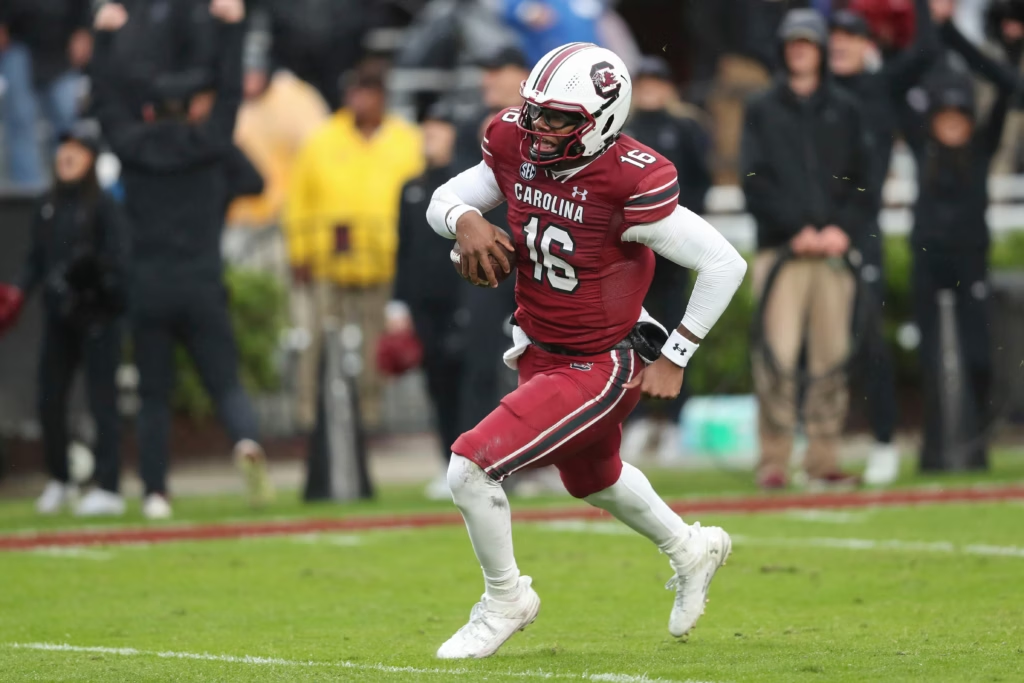
Sellers was projected in the preseason to be one of the top quarterback prospects in the 2026 NFL Draft. But after a rough 4-8 season and some injuries, Sellers did not want to go out to the pros on a sour note like that.
Plus, he wants to spend another year developing his skills to become a better QB prospect in 2027. That is very mature thinking on his part.

Manning has a different situation. He came into this season under pressure of having the last name “Manning”. Because of that, many experts saw him leaving early for the draft and being the No. 1 pick.
Let’s put on our thinking caps for this one. Manning is a very talented quarterback, but according to his grandfather, Archie Manning, the Mannings don’t leave college early. In other words, Arch will return for his junior year and possibly his senior year.
And after a slow start, but a great ending to the season in which he had 4 top 25 wins in the SEC, Manning announced he would return for his junior year in 2027.
The moral of the story is: if you’re a top college football player and you have a choice between leaving for the draft early and earning less of a salary, or staying another year and choosing NIL, do the smart thing and return to college.
Keep working on your skills, and you’ll know when you’re NFL-ready.
For another interesting Sports story, please check out:
Could Las Vegas Raiders Go from Worst to First with Klint Kubiak at the Helm?


